
Research

NextG Wireless Networks & Systems

NextG Wireless Networks & Systems

Future wireless networks will support Gbps+ data rates and sub-millisecond latency for AR/VR/XR, autonomous driving, and smart cities. We work on the theory and experimental aspects of enabling technologies — millimeter-wave communications, massive-antenna systems, optical-wireless communications, integrated communication and sensing, and edge computing — validated on real-world testbeds such as the NSF PAWR COSMOS Platform.

Selected papers
AI/ML-Enabled Wireless & Optical Networking

AI/ML-Enabled Wireless & Optical Networking

As we embrace 5G and beyond, network infrastructures must meet massive computation needs and increasing complexity. We build AI- and ML-powered wireless and optical networking to create adaptable, scalable, performance-aware infrastructure, complementing and augmenting algorithmic alternatives with data-driven approaches.

Selected papers
Scalable Wireless Digital Twins

Scalable Wireless Digital Twins

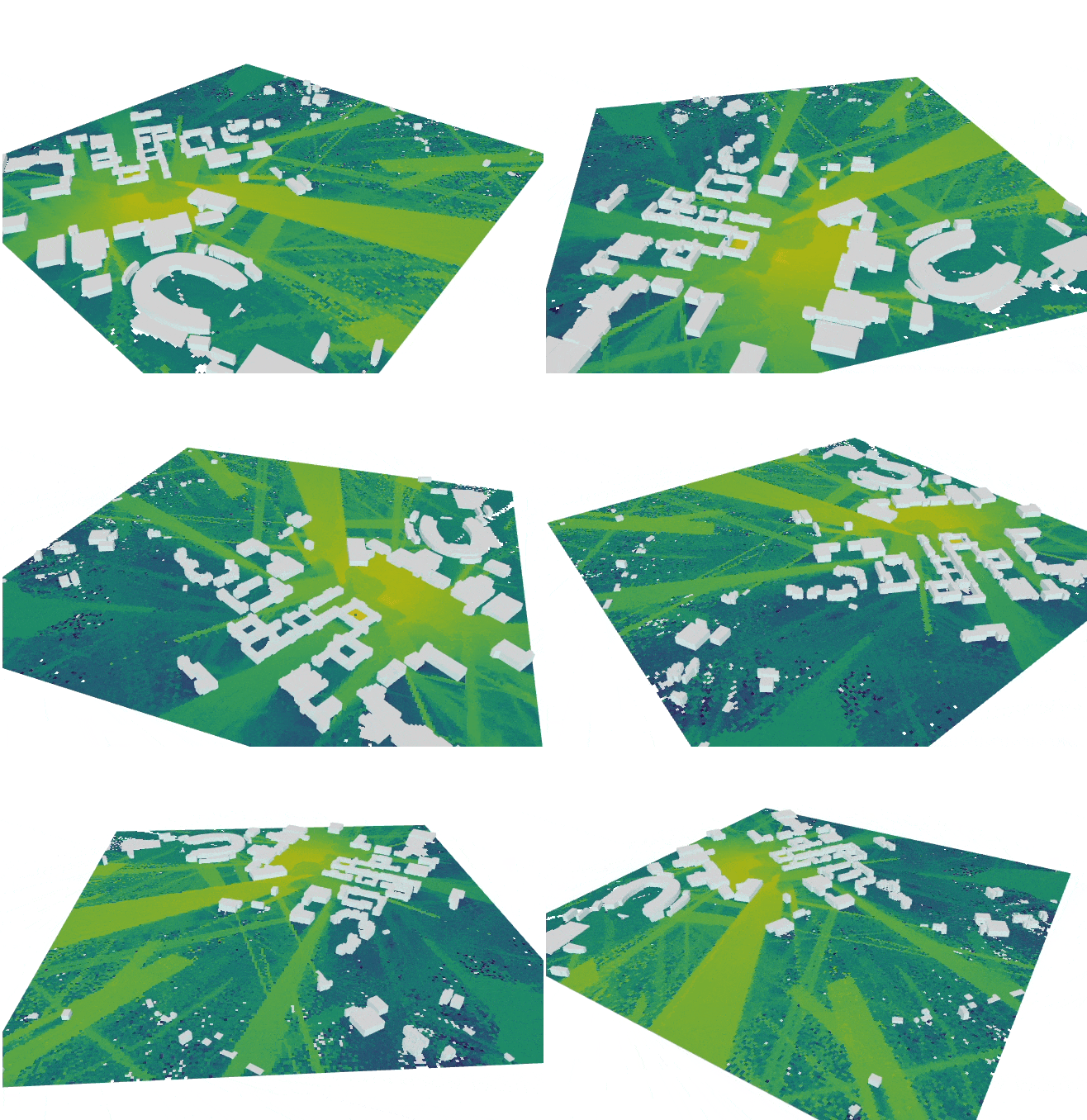
Wireless digital twins built from real-world 3D scenes and ray-tracing engines provide an integrated platform for designing, modeling, and optimizing next-generation networks. We build scalable, adaptive, physically accurate digital twins and enhance their roles in future networks (6G and O-RAN).

Selected papers
DySPAN'24DySPAN'25OFC'23TAP'21mmNets'19
Analog & In-Physics Computing

Analog & In-Physics Computing

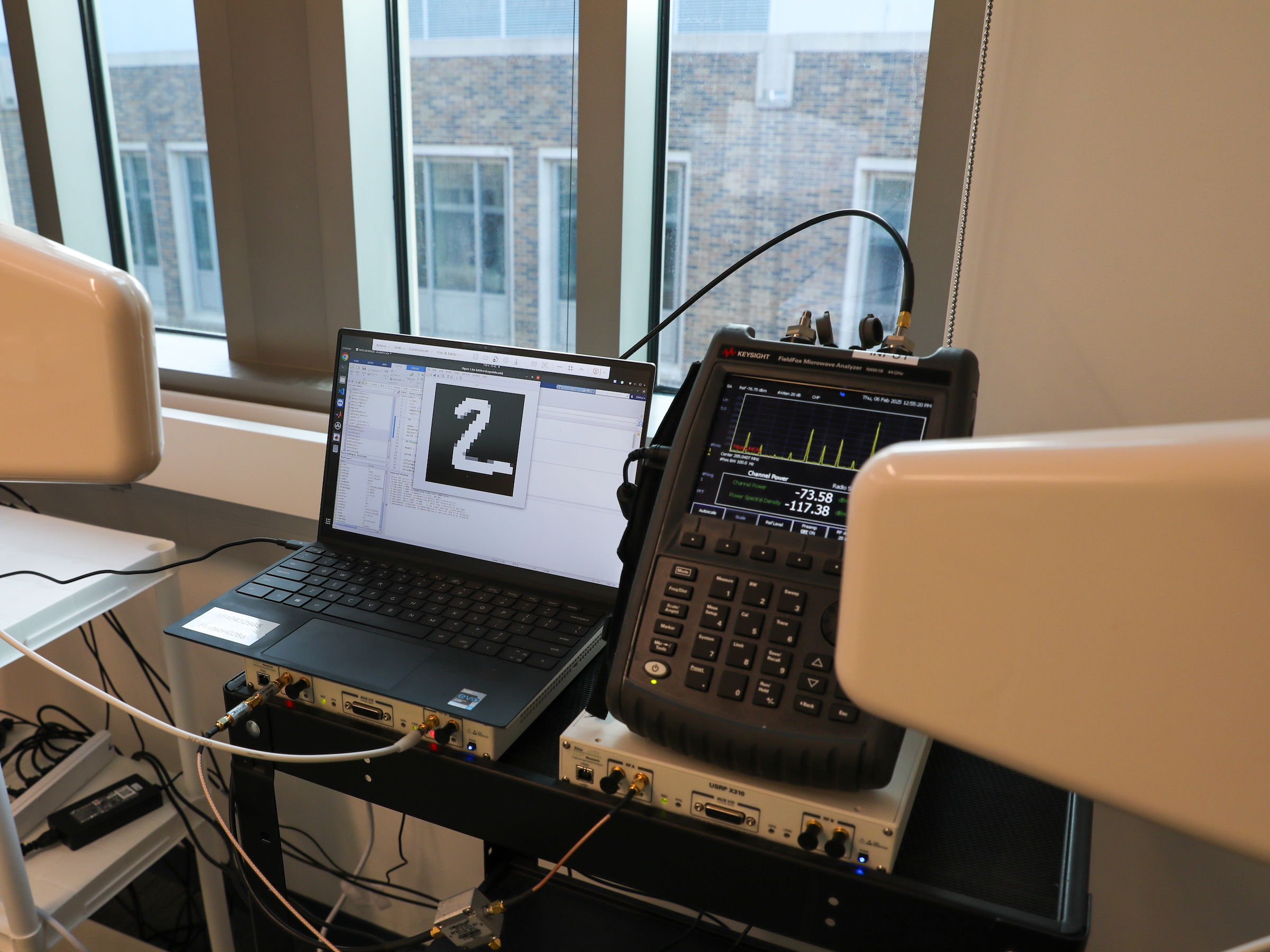
Deploying ML on resource-constrained edge devices demands large memory and compute. We investigate novel waveform design, common electronics, and wireless broadcast to realize ultra-low-power ML inference directly at the RF/analog signal level. Our Science Advances paper showed a single passive RF mixer performing large-scale fully connected layers.

Selected papers
Sci. Adv.'26AI4NextG'25arXiv'25CoNEXT'16INFOCOM'16
Prototyping, Testbeds & HW-SW Co-Design

Prototyping, Testbeds & HW-SW Co-Design

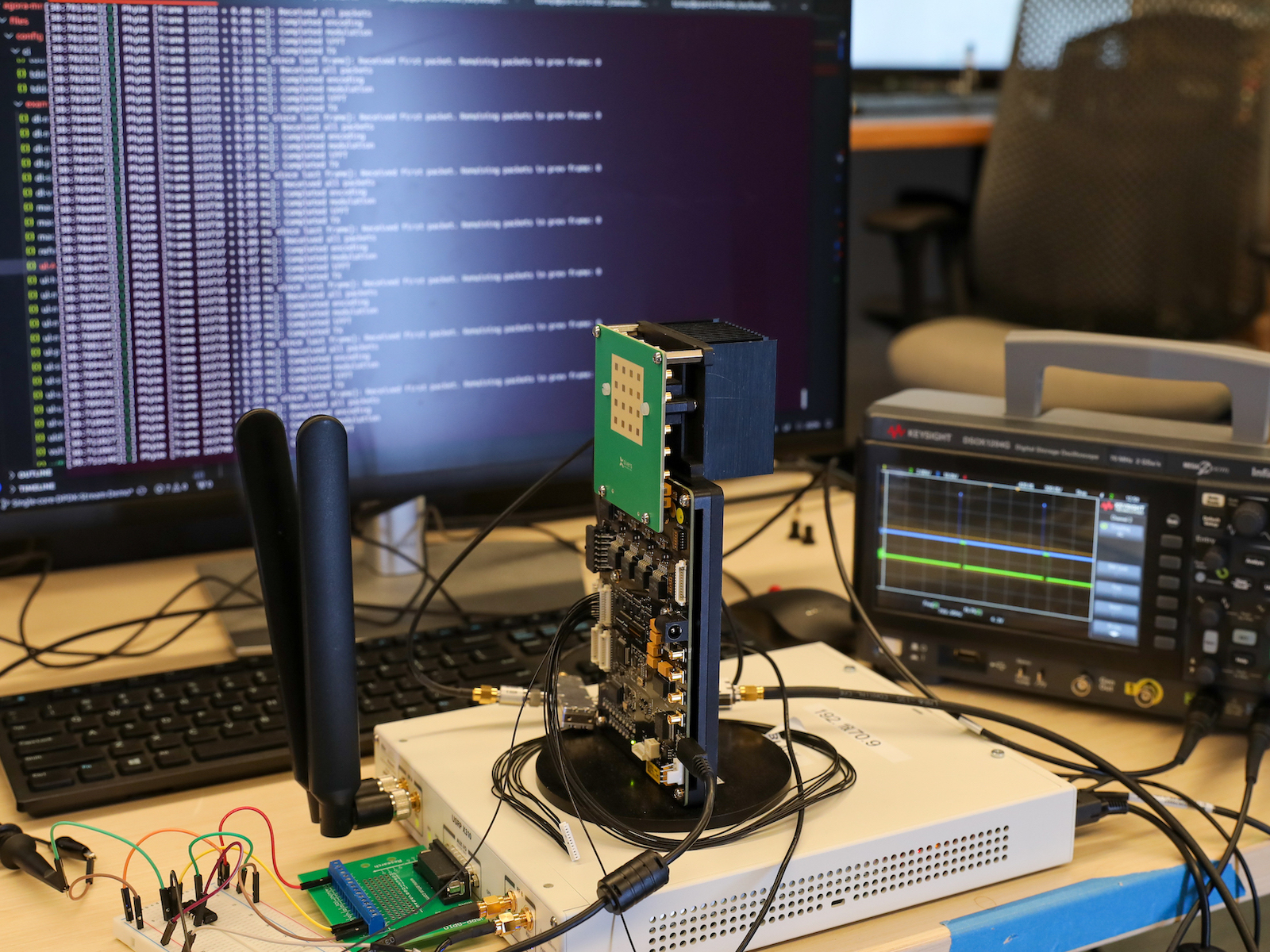
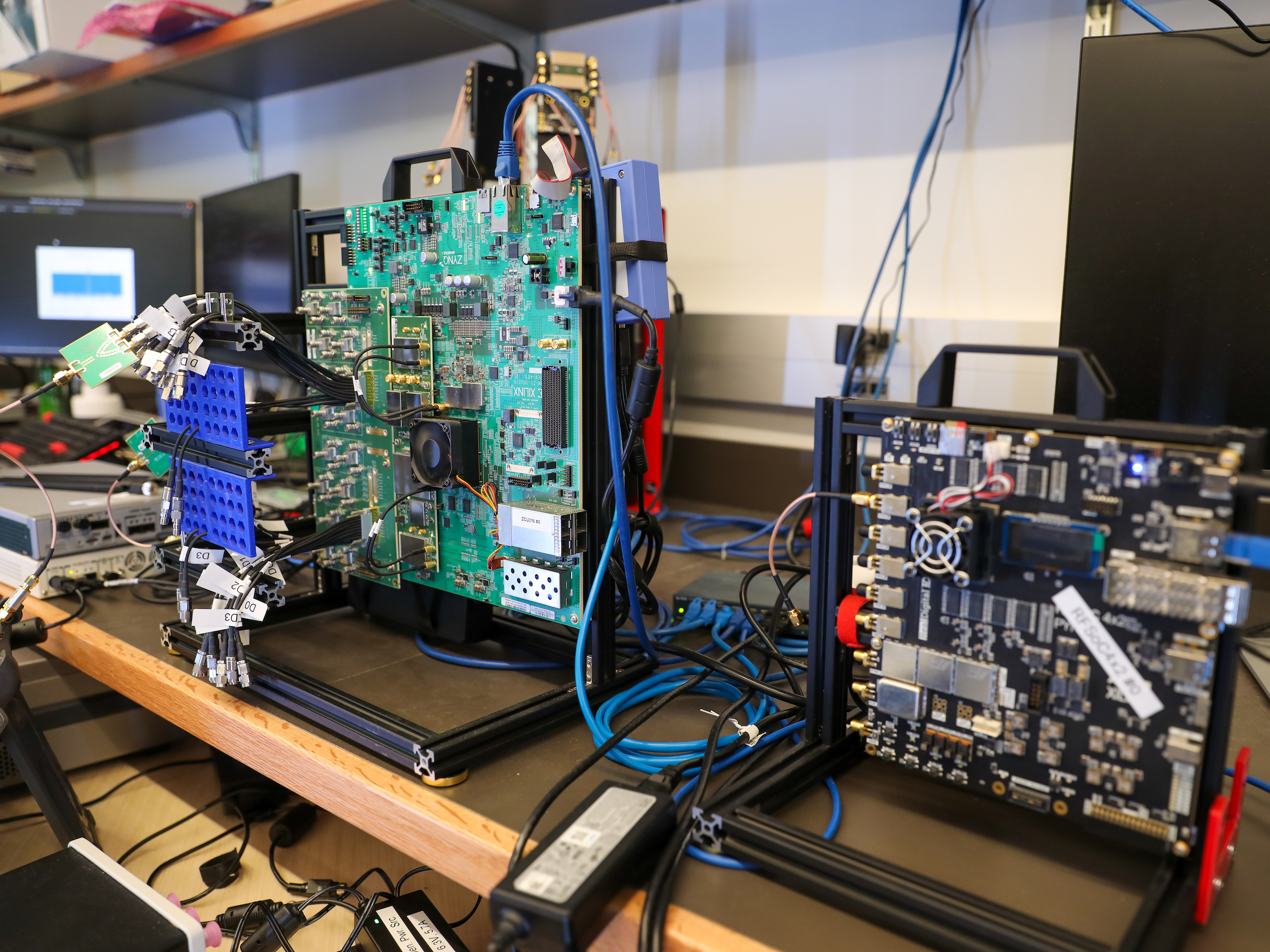
Our projects involve extensive hardware/software development — software-defined radios (USRP X3xx/N3xx/X4x0, Xilinx Gen-3 RFSoC) with sub-6 GHz and mmWave (28/60/140 GHz) front ends, edge servers with CPUs/GPUs/ASICs, and high-speed coherent transceivers. We leverage a Duke-campus wireless-optical testbed and the city-scale COSMOS Platform in West Harlem, NYC.

Selected papers
WiNTECH'24COMNET'23MobiCom'20IEEE Network'22JSSC'24
Quantum Networking & Sensing

Quantum Networking & Sensing

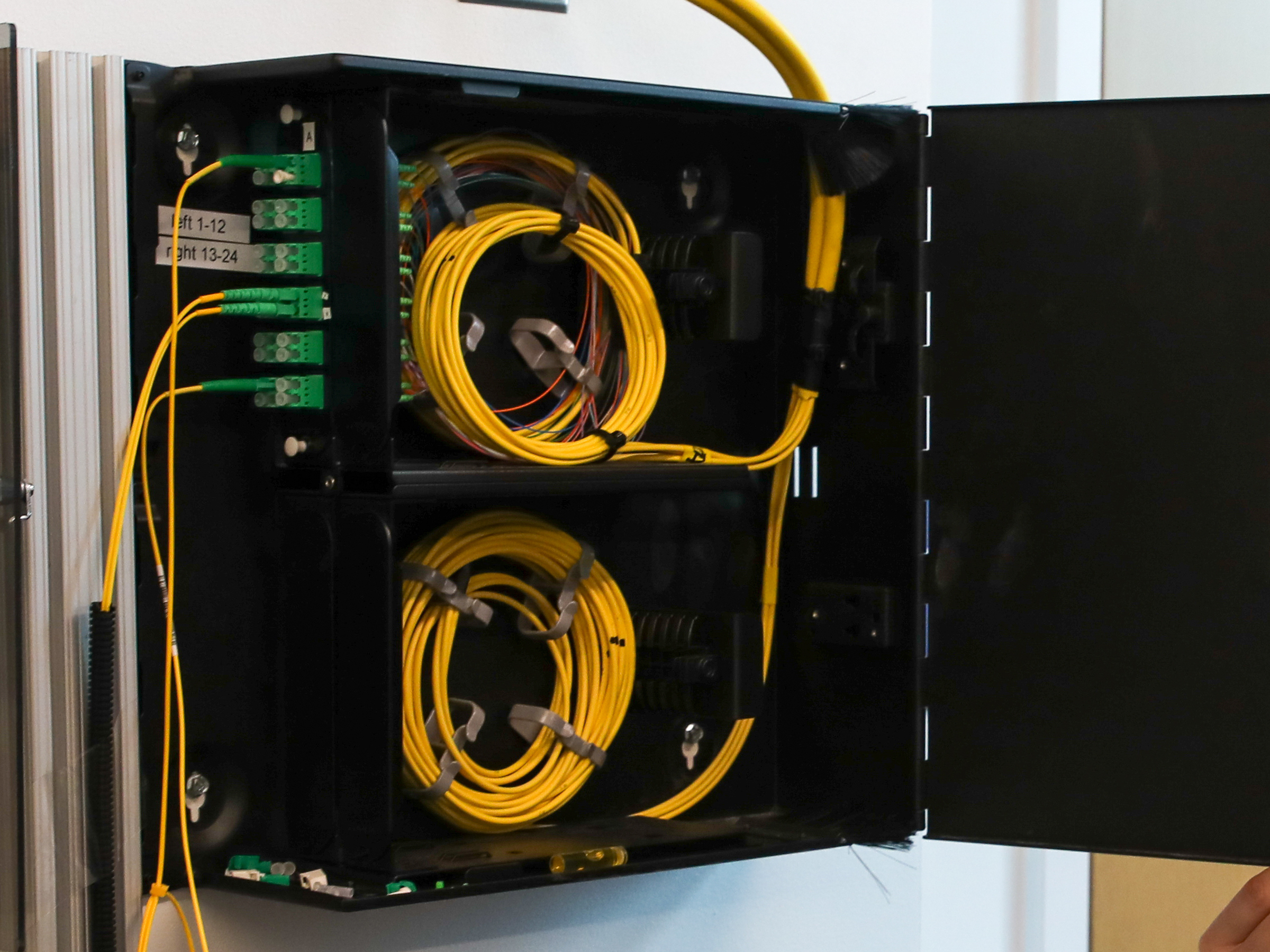
Building toward quantum-classical coexistence over deployed fiber — quantum links, entanglement distribution, and fiber sensing. Field trials demonstrate coexistence of quantum channels with coherent 400 GbE and 5G services in dense urban environments.

Selected papers
OFC'26JLT'24OFC'23OFC'24SGW'26
Spectrum Monitoring & Coexistence

Spectrum Monitoring & Coexistence

Expanded spectrum usage calls for coexistence of commercial services, non-commercial active users (weather satellites, GPS), and passive users (radio astronomy). We design cooperative network systems where receivers detect in-band and adjacent-band interference in real time, identify its type and source, and react via selective interferer nulling using intelligent control and ML.

Selected papers
DySPAN'26DySPAN'26MLNextG'24MobiHoc'23ECOC'24

Acknowledgments

Our research projects are supported in part by grants from NSF (CAREER, CIRC GRAND/ENS, CC* Integration-Large, NewSpectrum, EAGER, SII-NRDZ, CISE Core, SWIFT, and Athena AI Institute for Edge Computing), ARO (W911NF2510241), SRC/DARPA JUMP 2.0 Center for Ubiquitous Connectivity (CUbiC), Duke Science & Technology Initiative and Pratt School of Engineering, as well as grants and gifts from ACM SIGMOBILE, Enegis, Google, IBM, NEC Labs America, NTT, and NVIDIA. The findings, positions, or opinions of our research projects do not necessarily represent the official policy of any of these organizations.